THE PLAYBOOK · XJFDJSZP
A practical guide to Nonogram
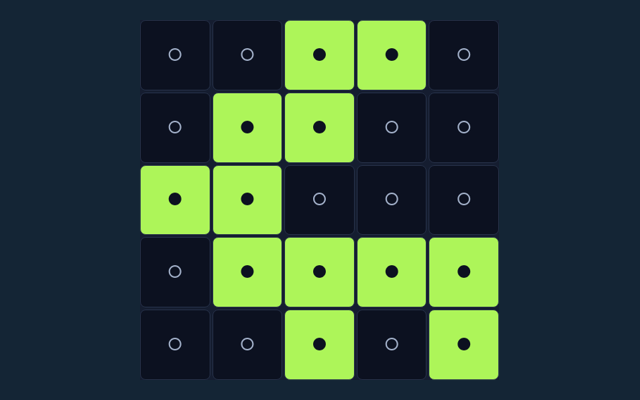
Start Nonogram by looking at the playing area and its controls. Shade the grid so every row and column matches its run-length clues. Check the relevant rule before repeating a move. Use the opening round to become familiar with the layout. Check the relevant rule before repeating a move.
Work through a collection of twelve 5×5 picture puzzles.
Build familiarity through play
Watch the feedback after an action. A message can explain whether the input was accepted or whether a rule needs attention. Use the example to check your reasoning.
The goal to keep in mind
Shade the grid so every row and column matches its run-length clues. Read that aim before choosing your first action. Keep the controls in easy reach.
The playing sequence
- Cycle a square between filled, crossed and blank.
- Keep separate runs apart by at least one blank.
- Combine row and column deductions.
- Check puzzle verifies the finished grid.
How to interact with the game
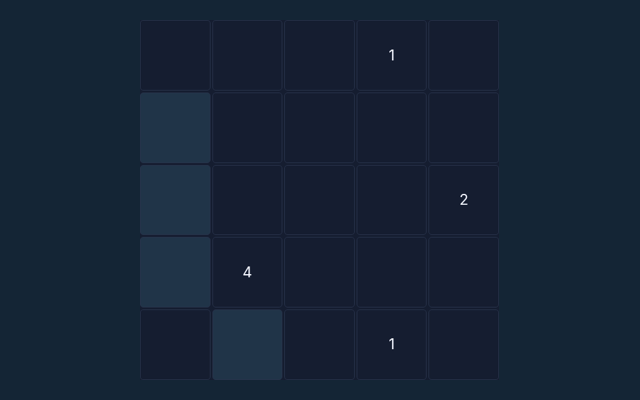
Click or tap squares or graph edges. Number boards include a digit pad. Undo reverses the previous change; Check puzzle validates the solution. Use the control method described here for this activity. Avoid pressing the same control repeatedly while a move is being processed.
One way to understand the rules
Clue 2 1 requires a run of two, a blank separator, and a run of one. Use the example as a guide rather than a substitute for reading your board. Take a moment to compare.
Watch out for this
Do not merge two separate runs. Check the rule before repeating the action. When a decision goes wrong, compare it with the common mistake described below. Start again only when you intend to leave the current round.
Read these answers for extra help
While reading the Guide, what is the goal of Nonogram?
The key detail is this: Shade the grid so every row and column matches its run-length clues.
On this playing page, how do I control Nonogram?
Keep this in mind: Click or tap squares or graph edges. Number boards include a digit pad. Undo reverses the previous change; Check puzzle validates the solution.
For my first round, what example helps explain Nonogram?
Here is the relevant explanation: Clue 2 1 requires a run of two, a blank separator, and a run of one.
On this playing page, what should I watch out for in Nonogram?
Here is the relevant explanation: Do not merge two separate runs.
On this playing page, what format does Nonogram offer?
The key detail is this: Work through a collection of twelve 5×5 picture puzzles.
On this playing page, which play mode does Nonogram use?
For clarity: The mode on this page is Solo. Same-device play uses one screen; this game library does not provide internet matchmaking.